Nutrition Truths
What to eat before a football match as a teen player
What to eat before a football match when you're 12 to 17. The night before, breakfast for early and late kick-offs, the last snack, and what to avoid.
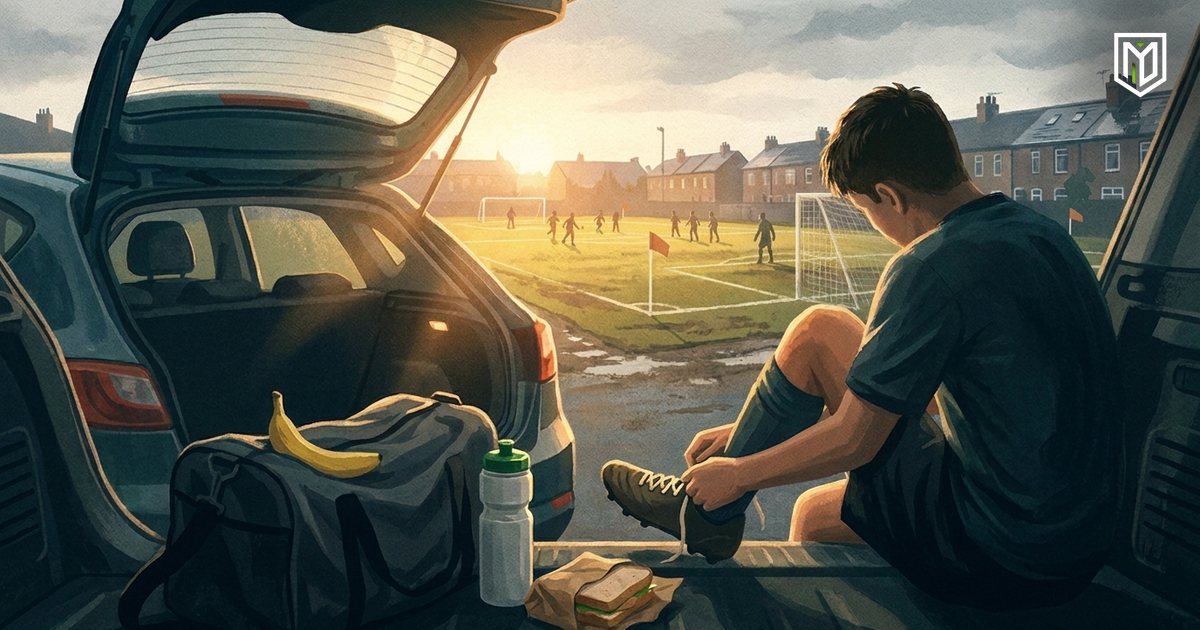
Loads of players turn up to a Sunday morning game on half a slice of toast, then wonder why their legs go in the second half. You don't need to be one of them.
Most guides on what to eat before a football match are written for adult pros with a chef. You've got a 10am kick-off, a lift at 8.30 and whatever's in the cupboard. This is the version for that.
Quick note first. I'm a player, not a dietitian. Everything here is general healthy eating, backed by the British Dietetic Association, the NHS Eatwell Guide and the expert group UEFA put together on football nutrition. If you've got a medical condition, an allergy or advice from your GP or a dietitian, follow theirs over mine.
How long before a football match should you eat?
The rough timings most of the guidance agrees on:
- Main meal: about 3 to 4 hours before kick-off. That's what the UEFA expert group recommends for players.
- Lighter meal: 2 to 3 hours before. The British Dietetic Association says low fat, high carb.
- Small top-up: 1 to 2 hours before, if you're hungry.
Carbs are the fuel. Your muscles store them, and a full match burns through a lot of them. Pasta, rice, bread, potatoes, oats, cereal, fruit. Normal food.
You don't need scales or an app. A proper plate at the right time does most of the work.
What to eat the night before a match
The night before is massively underrated. Especially for a morning kick-off, because you won't have long to eat on the day.
Make dinner a normal plate with the starchy bit a bit bigger than usual, plus some protein and veg:
- Spaghetti bolognese
- Chicken, rice and veg
- Jacket potato with tuna or beans
- Noodle stir fry with chicken or tofu
Don't eat until you feel sick. Just don't skip it. Have a drink with it and get to bed at a sensible time.
And save the new takeaway your mate keeps going on about for after the game. More on that below.
Best breakfast before a football match (morning kick-off)
This is where most of us get it wrong. 10am kick-off, meet at 9.15, leave the house at 8.30. You either eat at 7.30 or you don't eat.
Eat. The UEFA expert group points out that an overnight fast can drop the fuel stored in your liver by around half. Skip breakfast and you're starting the match already behind.
For an early game, eat around 2 to 2.5 hours before and keep it lighter:
- Porridge with a sliced banana and a bit of honey
- Toast or a bagel with jam, honey or a thin layer of peanut butter
- Cereal with milk and a banana
- Scrambled eggs on toast, if you're up early enough
Keep the fat low. The full English is a post-match thing. You've earned it then, not before.
What to eat before an afternoon kick-off
2pm or 3pm games are easier. You get a normal breakfast, then a proper meal in the middle.
Match at 3pm? Eat at 12. Something like:
- Pasta with tomato sauce and chicken
- Rice with chicken or fish
- A couple of sandwiches or wraps with a lean filling, plus a piece of fruit
- Beans on toast with a yoghurt after
Then a small snack about an hour and a half before kick-off if your stomach's asking for it.
Snacks before football: the last top-up
1 to 2 hours out, you want something small, plain and easy on the stomach. Nothing that needs a lot of chewing or sits there like a brick.
- A banana
- Rice cakes with jam
- A slice of toast or half a bagel with honey
- A small pot of yoghurt
- A handful of dried fruit, or a couple of plain biscuits
The best pre-match snack is one you've already eaten before training and know your stomach is fine with.
What not to eat before a football match
Some stuff is better saved for later in the day.
- Greasy food. Chips, burgers, sausage rolls, a fry-up. Fat digests slowly, so it's still sitting there at kick-off.
- Loads of fibre right before. Bran cereal, a giant bowl of beans, a massive salad. Good food normally, but high fibre right before a game can mean wind and an unsettled stomach mid-match.
- Anything new. Sports Dietitians Australia's advice is to use training to test meals and timings, not match day. New protein bar, new curry, new anything: try it on a Tuesday.
- Energy drinks and caffeine. Not for under-18s, full stop. I wrote about why we keep caffeine out of anything for under-18s, and it's the one thing in this post I'll be stubborn about.
Drinks matter as much as food. Have one with every meal and sip water through the morning instead of downing a litre in the car park. I've gone through how much water young footballers actually need in its own post.
Nervous stomach or no appetite before a game?
Trials, cup games, anything big. Stomach in knots, can't look at breakfast. Loads of players get it.
What helps:
- Eat earlier and smaller. A bit of toast at 7 beats nothing at all.
- Drink some of it. Sports Dietitians Australia suggests a liquid or low fibre meal if nerves or gut upset are an issue. A glass of milk, a smoothie or a yoghurt drink can go down when food won't.
- Go plain. Toast, a banana, rice cakes. Nothing rich.
- Let the night before carry it. If you know you won't eat much in the morning, make dinner count.
- Practise it. Eat your match-day breakfast before a training session first, so it's not a surprise to your stomach.
If you've got a trial coming up, food is one less thing to worry about. I've also written up what coaches actually look at during trials week.
After the final whistle
Pre-match is only half of it. What you eat once you're home matters just as much, and I've covered what to eat after football training and matches separately.
And if you're wondering whether you need protein powder on top, you probably don't. Here's the truth about protein for teenage players.
The parent bit
You don't need specialist products for match day. Normal food from the Eatwell Guide, at the right time, covers it. Even the UEFA statement, written for elite pros, puts food first.
The practical stuff: keep bread, bananas, oats and pasta in for the weekend, and plan Saturday night's tea around Sunday's kick-off time. If you're driving to an early game, a banana in the glovebox is never wasted.
If your child's appetite is up and down for weeks, or they've got a condition that affects what they eat, talk to your GP.
Sorting a Christmas present for a player? The Pro Box has a NUTRI-TEEN bar and 3 caffeine-free Vidrate electrolyte sachets for the kit bag, plus grip socks and a 750ml bottle. It's £37.99 with UK delivery. Order by 12 December.
Quick answers
How long before a football match should you eat? Main meal 3 to 4 hours before kick-off, a small snack 1 to 2 hours before if you're hungry.
Is it OK to play football on an empty stomach? Better not, especially for morning games. Even something small and plain like toast or a banana beats nothing.
Is a banana good before a football match? Yes. Easy to digest, mostly carbs, and it fits in a kit bag.
What should you not eat before a football match? Greasy food, very high fibre food, anything you've never tried before, and energy drinks or caffeine.
The Pro Box comes with a NUTRI-TEEN bar, electrolyte sachets, a massage ball and a kit bag, so there is something in the bag on match day. But the real work is done by normal food at the right time. Get the timings right and you're sorted.
The Pro Box
Kit for the pitch, in time for Christmas.
Grip socks, sports tape, a training journal, a water bottle and match day fuel. Picked by a player, for players aged 12 to 17.
- £37.99, UK delivery included
- Order by 12 Dec. Posted by 16 Dec with Royal Mail Tracked 48
- Only 50 boxes