Nutrition Truths
The Truth About Protein For Teenage Players
Every supplement brand wants your parents' bank card. Here's what a 14 year old footballer actually needs.
How much protein you actually need
Between 1.2 and 1.6 grams per kilo of body weight, per day. That's it. Sports scientists have been saying this for years.
A 60 kilo player needs about 72 to 96 grams a day. Not 200. Not "the more the better." That number.
The 2 grams per kilo you see on Instagram is aimed at adult bodybuilders trying to add mass. You're not a bodybuilder. You're a growing footballer, and your body has different rules.
What that looks like on a plate
72 to 96 grams sounds like a lot. It isn't.
- Chicken breast: about 30g
- Greek yoghurt (150g pot): about 15g
- One egg: 6g
- Glass of milk: 8g
- Tin of tuna: 25g
- Bowl of oats with milk: 12g
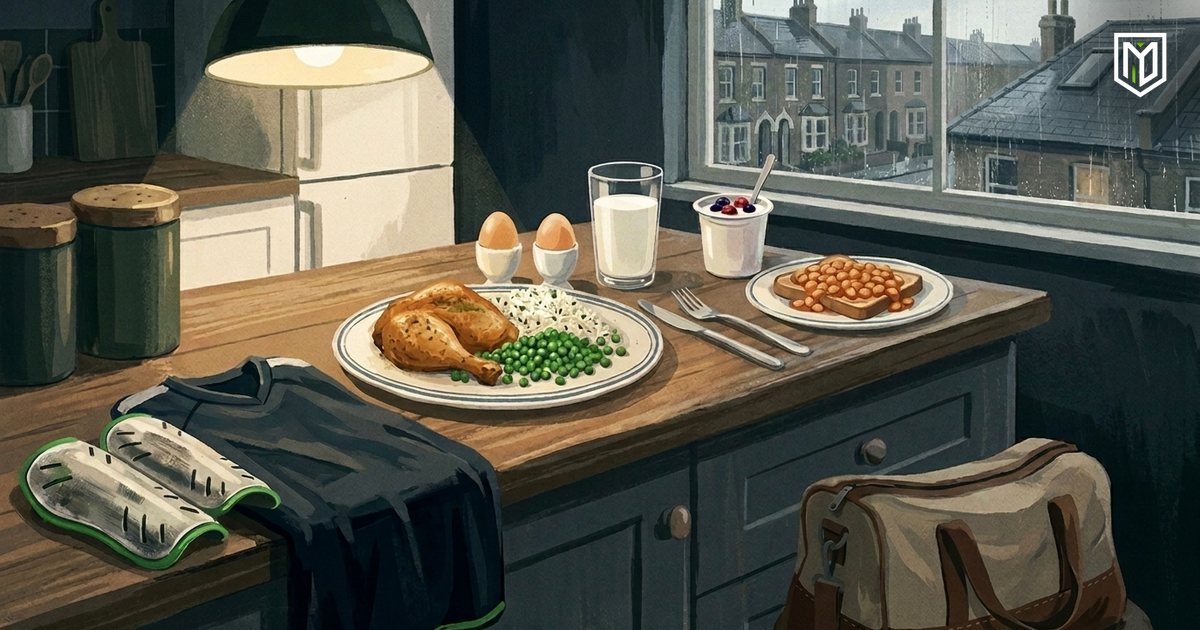
Chicken and rice at dinner, yoghurt and oats at breakfast, tuna sandwich at lunch, glass of milk before bed. You're at 90g without trying.
No powder. No tubs. Just food.
Timing matters less than they tell you
Every fitness account tells you to slam protein in the 30 minute "anabolic window" after training. That window doesn't really exist for you.
The research on trained adults says total daily protein spread across 4 to 5 feedings hits the same result as chugging a shake the second you leave the pitch.
Eat a normal meal within a couple of hours of training. Space your other meals across the day. That's the whole strategy.
The post-match snack that actually works
Chocolate milk. Not a joke.
A glass of chocolate milk has protein, sugar, salt and fluid in roughly the ratio the research says matters (3 grams carbs to 1 gram protein). It's cheaper than any recovery shake and your parents can pick it up from a corner shop.
Save the shakes for the kids whose sponsors are paying for them.
Protein powder: the honest verdict
Not necessary for teens. Not dangerous if the brand is decent. But it's replacing food you should be eating anyway.
Whole food beats powder because it brings extras your body needs: iron in red meat, calcium in dairy, healthy fats in eggs and fish. Powder is protein alone. It's not evil. It's just not the magic answer the brand is selling.
If your family budget has £30 for supplements this month, spend it on a proper Sunday roast and a fortnight of chicken breasts instead.
Vegetarian and low-appetite versions
Vegetarian: lentils, chickpeas, quinoa, tofu, eggs, dairy. A properly built veggie meal hits the same total. It takes a bit more thought, not more supplements.
Low appetite (some players get this in growth spurts): three smaller meals plus two snacks beats forcing three big ones. Milk-based drinks between meals are your friend. Peanut butter on toast at 9pm is not cheating.
The parent bit
If your player is training three or more times a week and eats normal home food, they are almost certainly getting enough protein. The British Dietetic Association's sport nutrition guidance says the same: in most cases a healthy, balanced diet gives enough protein, spread across the day. The number of supplements aimed at 13 to 17 year olds on Amazon is not evidence you need them. It's evidence of a market.
Quick answers
How much protein does a teenage footballer need? Between 1.2 and 1.6 grams per kilo of body weight a day. For a 60 kilo player that's about 72 to 96 grams.
Do teenage footballers need protein powder? No. It isn't dangerous if the brand is decent, but it replaces food they should be eating anyway. Normal meals cover it.
When should you eat protein after training? Have a normal meal within a couple of hours of training and spread protein across the day. The 30 minute window matters less than the adverts say.
What's a good snack after a football match? A glass of chocolate milk. Protein, sugar, salt and fluid, and cheaper than any recovery shake.
Can vegetarian players get enough protein? Yes. Lentils, chickpeas, quinoa, tofu, eggs and dairy hit the same total. It takes a bit more thought, not more supplements.
The Pro Box
Kit for the pitch, in time for Christmas.
Grip socks, sports tape, a training journal, a water bottle and match day fuel. Picked by a player, for players aged 12 to 17.
- £37.99, UK delivery included
- Order by 12 Dec. Posted by 16 Dec with Royal Mail Tracked 48
- Only 50 boxes