Nutrition Truths
What to eat after football training: a player's guide
What to eat after football training at 12 to 17, from a player who has lived it. Including the 9pm finish and what's actually OK before bed.
Training finishes. You're starving and soaked, and the only food in the car is a half-eaten bag of crisps from Tuesday. Every player knows that car journey.
I'm Jack, 18, a full back with five academy trials behind me and a lot of late drives home from training. Working out what to eat after football training took me way longer than it should have. Most of what's online is written for adults in a gym, or for under-8s on a Saturday morning.
So this is the version for teenage players with school in the morning and a normal kitchen.
What should you eat after football training?
Carbs and a bit of protein, plus something to drink.
Carbs are the big one. They refill the fuel your muscles just burned through, and that fuel is what you'll be running on next session. Protein helps your body repair. And you need to replace the water and salt you lost in sweat, which is easy to forget on a cold night when you don't feel thirsty.
The British Dietetic Association says that if you need to recover quickly, start refuelling with carb-rich food and fluids as soon as you can after exercise.
None of this needs special products. It's the same food on the NHS Eatwell Guide: potatoes, bread, rice and pasta as the base, protein foods like beans, eggs, fish and meat, plus some dairy. You're just timing it a bit better.
I've already written about how much protein teenage players actually need, so I won't go into grams here. Short version: normal food covers it.
The snack in your bag vs the proper meal
Recovery comes in two parts. First is the snack straight after, in the changing room or the car. Second is a proper meal at home a bit later. Most of us skip the first bit, then get home and raid the cupboard for whatever's there.
What's worth keeping in the bag or the car door:
- A banana and a cheese sandwich
- A yoghurt pot and a cereal bar
- A bagel with peanut butter (check nobody on your team has a nut allergy before you open it in the dressing room)
- Crackers and cheese
- A carton of milk, plain or flavoured
Chocolate milk gets talked about a lot, and there is some research behind it. A dietitian reviewing the evidence in The Conversation found it rehydrates better than water or sports drinks, but there's no evidence it beats plain milk. It's got added sugar too, so she suggests keeping it occasional. That's how I treat it. Fine after a hard session, not a daily habit.
Have water as well. I've done a whole piece on how much water young footballers need, so read that if you're the player who finishes training with a full bottle.
Then the proper meal, ideally within a couple of hours. Something like:
- Chicken, rice and veg
- Pasta with a mince or bean sauce
- Jacket potato with tuna, or beans and cheese
- Egg fried rice with frozen peas
- Wraps with chicken or falafel and salad
A big base of carbs with some protein on it. Veg if you can get it in.
What to eat after evening training that finishes at 8 or 9pm
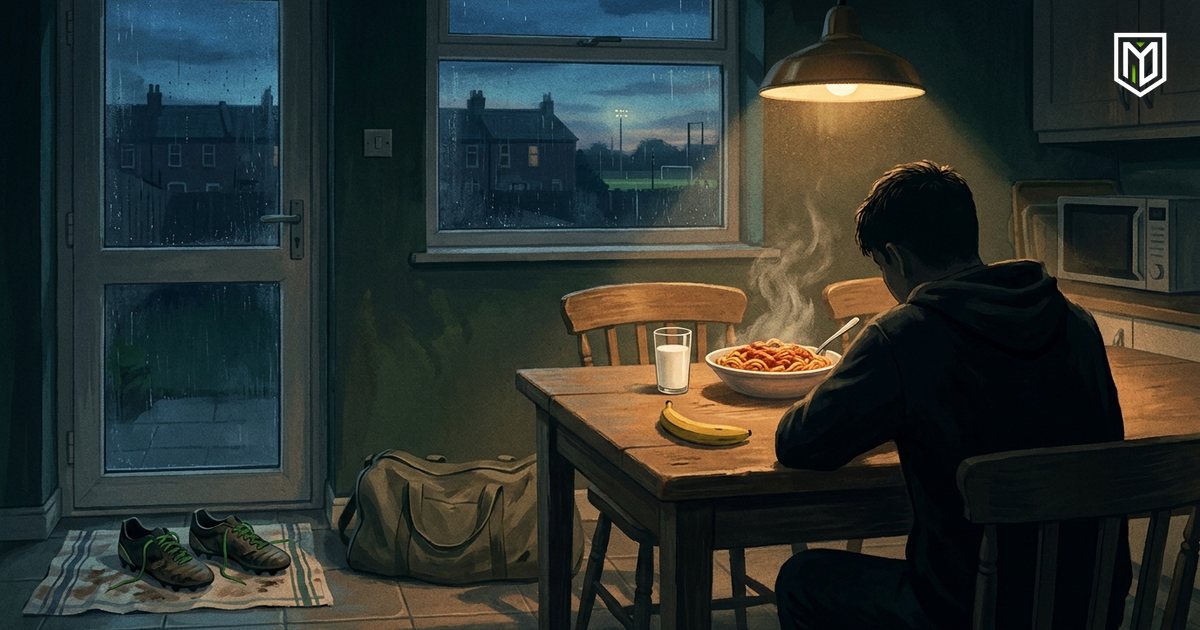
This is the one nobody seems to answer properly, and it's the one most of us actually live with. Loads of sessions finish late. You're home at half nine, there's school tomorrow, and you need to sleep.
The NHS sleep advice for young people from Oxford Health's CAMHS team is pretty clear. Don't go to bed hungry, but don't eat a massive meal right before bed either. Big meals and sugary snacks late at night can mean a restless night.
So the answer isn't skipping food. It's moving it around.
What works:
- Eat your main meal earlier, a few hours before you leave for training
- Have the bag snack straight after so you're not starving on the way home
- Then something light at home: cereal with milk, eggs on toast, yoghurt and a banana, or a small bowl of leftover pasta
I'd skip the takeaway on the drive home. Not because of guilt. A huge greasy meal at 10pm just makes it harder to get to sleep, and you need that sleep.
Same goes for energy drinks to "wake up" for homework. I've explained why we keep caffeine away from under-18s, and late at night is the worst possible time for it.
What to eat after a football match, and the day after
Matches are harder than training. Same rules, bigger portions.
The UEFA expert group statement on nutrition in elite football says one of the main jobs after a match is refilling your carb stores. It also points out that even elite players often don't hit their carb targets after evening games. If pros with nutritionists struggle, it's no wonder we do.
The bit I found useful: when games are close together, the statement says carb intake should stay up for the 48 to 72 hours between them. In normal words, the day after a match isn't the day to go light. Eat your meals, properly.
Tournament days are their own thing. Three or four games, no time for a meal between each one. So go small and often:
- Sandwiches, bananas, rice cakes, malt loaf, cereal bars
- Water between every game, not just when you remember
The same UEFA statement flags tournaments with back-to-back games as a challenge for staying hydrated, which anyone who's played a summer tournament will recognise. For the other side of it, I've covered what to eat before a football match too.
Cheap recovery food: the bit for the bill-payer
If you're the one doing the food shop, good news. Recovery food is just food.
The UEFA experts say the extra protein young players need is "easily achievable from dietary sources, without the need for supplements". Their whole approach is food first. You don't need recovery shakes, tubs, or anything with a label shouting at you.
Cheap stuff that does the job:
- Milk and yoghurt (dairy also brings calcium, which matters while they're growing)
- Bananas
- Bread, bagels and wraps
- Eggs, tinned tuna and baked beans
- Pasta, rice and oats
- Peanut butter
Cook a bit extra at dinner and the late-night snack for the next evening session is already sorted.
Be sceptical of heavily marketed recovery trends. Tart cherry juice is one: the UEFA statement says a study in football didn't show it improved recovery.
Shopping for Christmas? The Pro Box has a NUTRI-TEEN snack bar, 3 caffeine-free Vidrate electrolyte sachets and a 750ml bottle in it, so there's something in the bag after training. It's £37.99 with UK delivery. Order by 12 December.
If your player has a medical condition, an allergy or specific dietary needs, follow their GP or dietitian over anything in a blog post. This one included.
Food is only part of recovery
Eating right is one piece. Sleep and rest days matter just as much. I looked at whether you really need an ice bath at 14 in my ice bath vs cold shower post. Spoiler: probably not.
Quick answers
What should I eat straight after football training? Something with carbs and a bit of protein, plus a drink. A banana and a yoghurt, a cheese sandwich, or a carton of milk all work.
What should I eat after training that finishes at 9pm? Something light rather than a huge meal. Cereal with milk, eggs on toast, or yoghurt and fruit. Don't go to bed hungry, but don't go to bed stuffed either.
Is chocolate milk good after football? It can be. You get carbs, protein and fluid in one go. It has added sugar though, so keep it occasional. Plain milk does a similar job for rehydration.
Do teenage footballers need recovery shakes? No. Expert guidance for young players is food first, and the extra protein you need is easy to get from normal meals.
That's the plan. Some nights it'll still be toast at 10pm, and that's fine. It's also why The Pro Box has electrolyte sachets and a stimulant-free NUTRI-TEEN bar in it, so there's always something in the bag when the whistle goes.
The Pro Box
Kit for the pitch, in time for Christmas.
Grip socks, sports tape, a training journal, a water bottle and match day fuel. Picked by a player, for players aged 12 to 17.
- £37.99, UK delivery included
- Order by 12 Dec. Posted by 16 Dec with Royal Mail Tracked 48
- Only 50 boxes