Nutrition Truths
How Much Water Should a Young Footballer Drink?
How much water should a young footballer drink? My simple match day routine, plus when sports drinks are worth it and when they're a waste of money.
I'm a full back. That means ninety minutes of running up and down the touchline, and a lot of players have one hydration plan: grab a bottle on the way out. You can do better without buying anything fancy. I read what the NHS and the dietitians actually say and turned it into a simple routine.
So here's how much water a young footballer should drink, and when, without the marketing.
How much water do teenagers need a day?
The NHS says aim for 6 to 8 cups or glasses of fluid a day. Water, milk and lower-sugar drinks all count.
The British Dietetic Association gets more specific. From drinks alone, boys aged 9 to 13 need around 1,680ml a day and girls around 1,520ml. Once you're 14 or over it's the same as adults: about 2,000ml for boys and 1,600ml for girls.
That's the baseline on a normal day. Train hard and you sweat more out, so you need to put more back. The BDA says exactly that: sweat lost in exercise needs replacing.
These are general guides, not a target to hit to the millilitre. Some days you'll need more. Food counts too, by the way. The BDA reckons food covers roughly 20 to 30% of your water, from things like soup, fruit and veg.
The pee check (yes, really)
Easiest test there is. Look before you flush.
Pale straw colour means you're doing fine. Dark yellow and strong-smelling means you're behind. That's straight from the NHS dehydration page and the BDA. No app needed.
Check it in the morning and again before you leave for a match. If it's dark, you've got time to fix it.
The day before a match
Nothing clever here. Drink regularly through the day, with every meal and in between. Don't try to down two litres at 10pm. You'll just be up all night.
Get your food sorted too, because what you eat the night before and the morning of matters just as much. I wrote up my pre-match eating routine separately.
Match day morning
This is where most players get it wrong. They have a bit of juice at breakfast, nothing else, then feel flat by the 20th minute.
The UEFA expert group statement on nutrition (2020, written for elite players) suggests starting matches fully hydrated, with around 5 to 7ml per kilo of body weight in the 2 to 4 hours before kick-off. For a 50 kilo player that's 250 to 350ml. Basically a big glass or a bit more.
Not a bucket. A glass or two, spread out, then a few sips while you warm up. Do the pee check before you leave the house.
During the game and at half-time
In a match you don't get many chances to drink. Half-time is the big one, plus any break when someone's down or the ball's gone into the next field.
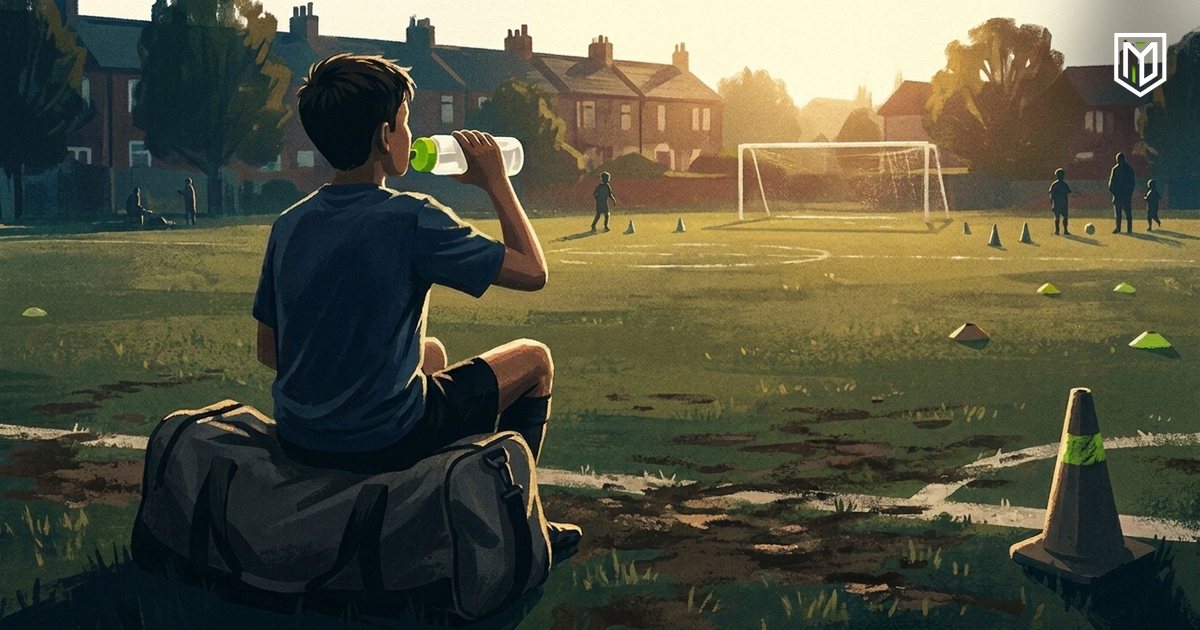
Use them. Have your own bottle, filled, by the side of the pitch. Sip, don't chug. Gulping half a litre at half-time and sprinting straight out is a stitch waiting to happen.
After the final whistle
Keep drinking as you cool down and on the way home. Water or milk both do the job, and milk brings some protein with it.
Then get a proper meal in. My post-training food guide covers what that looks like, and if you're wondering about shakes, read the protein truth post first. Recovery stuff like ice baths vs cold showers is a separate thing. Fluid comes first.
Hot days vs cold days
Hot days are obvious. More sweat, more fluid. Take a second bottle, drink a bit earlier and find shade at half-time.
Cold days catch people out. You don't feel thirsty when it's freezing, but you're still sweating under all those layers. Same routine, even in January.
If you or a teammate feel dizzy, sick, get a bad headache, cramps, or go pale and clammy in the heat, stop and tell a coach or an adult straight away. The NHS heat exhaustion page lists those signs. Hot skin that's stopped sweating, confusion or fainting means call 999. Playing on is never worth it.
Do kids need sports drinks?
Mostly, no.
The American Academy of Pediatrics put out a clinical report on sports drinks and energy drinks that's pretty blunt. Water should be the main drink for children and teenagers. Sports drinks have a limited role, for long, vigorous exercise where you need carbs and salts back quickly.
For a normal hour of training? Water. The NHS says the best drinks for children are water and milk.
Where a bit of salt and sugar starts to make sense is the long stuff. A tournament day with four games in the sun. A double session in August. A day where your shirt is soaked through by lunchtime. The BDA says people doing regular strenuous activity "may find other specific sports drinks useful too."
The teeth problem nobody mentions
Sports drinks are acidic, and most are sugary. The Oral Health Foundation lists them among the drinks that soften enamel, especially when you sip them for ages.
Their advice is simple. Keep acidic drinks to mealtimes where you can, use a straw, and wait at least an hour before brushing your teeth afterwards. Then swap back to water.
Sipping a bright blue drink for a whole match, every week, is not a hydration plan. It's a dentist appointment.
Energy drinks are not sports drinks
Different thing entirely. The same AAP report says caffeine and other stimulants have no place in the diet of children and teenagers.
They don't belong in your kit bag. I explained why we'll never put caffeine in a box for under-18s.
The parent bit
If your player is drinking regularly through the day, has a bottle at every session and the pee check comes back pale, they're probably fine. You don't need to buy a hydration "system."
Make water the easy option. A bottle that lives in the kit bag. A jug on the table at dinner. If your child has a medical condition that affects fluids, follow your GP's advice over anything in a blog, including this one.
For what it's worth, if you're after a Christmas present for a player, The Pro Box has 3 caffeine-free Vidrate electrolyte sachets and a 750ml water bottle in it. The sachets are for those long, sweaty days, not every Tuesday session. Water still does most of the work. You can see what's in The Pro Box.
Quick answers
How much water should a 14 year old footballer drink? From drinks, around 2,000ml a day for boys and 1,600ml for girls according to the BDA, plus extra to replace what you sweat out in training and matches.
Is water or a sports drink better for football? Water for most sessions. A sports drink can help on long, hot, sweaty days like tournaments. Not every training night.
What are the signs of dehydration in football? Thirst, headache, dizziness, tiredness, a dry mouth and dark yellow pee. In the heat, stop and tell a coach if you feel any of them.
Can you drink too much water before a match? Downing loads right before kick-off just leaves you sloshing about. Drink steadily through the day and have a glass or two in the hours before.
Are energy drinks OK for teenage athletes? No. Caffeine and stimulants have no place in a teenager's diet, says the AAP. Stick to water and milk.
*Jack is 18, a full back, and the founder of The Match Day Club.*
The Pro Box
Kit for the pitch, in time for Christmas.
Grip socks, sports tape, a training journal, a water bottle and match day fuel. Picked by a player, for players aged 12 to 17.
- £37.99, UK delivery included
- Order by 12 Dec. Posted by 16 Dec with Royal Mail Tracked 48
- Only 50 boxes